Kitchen
A damp cloth is not a cleaning plan
Kitchen5 min read
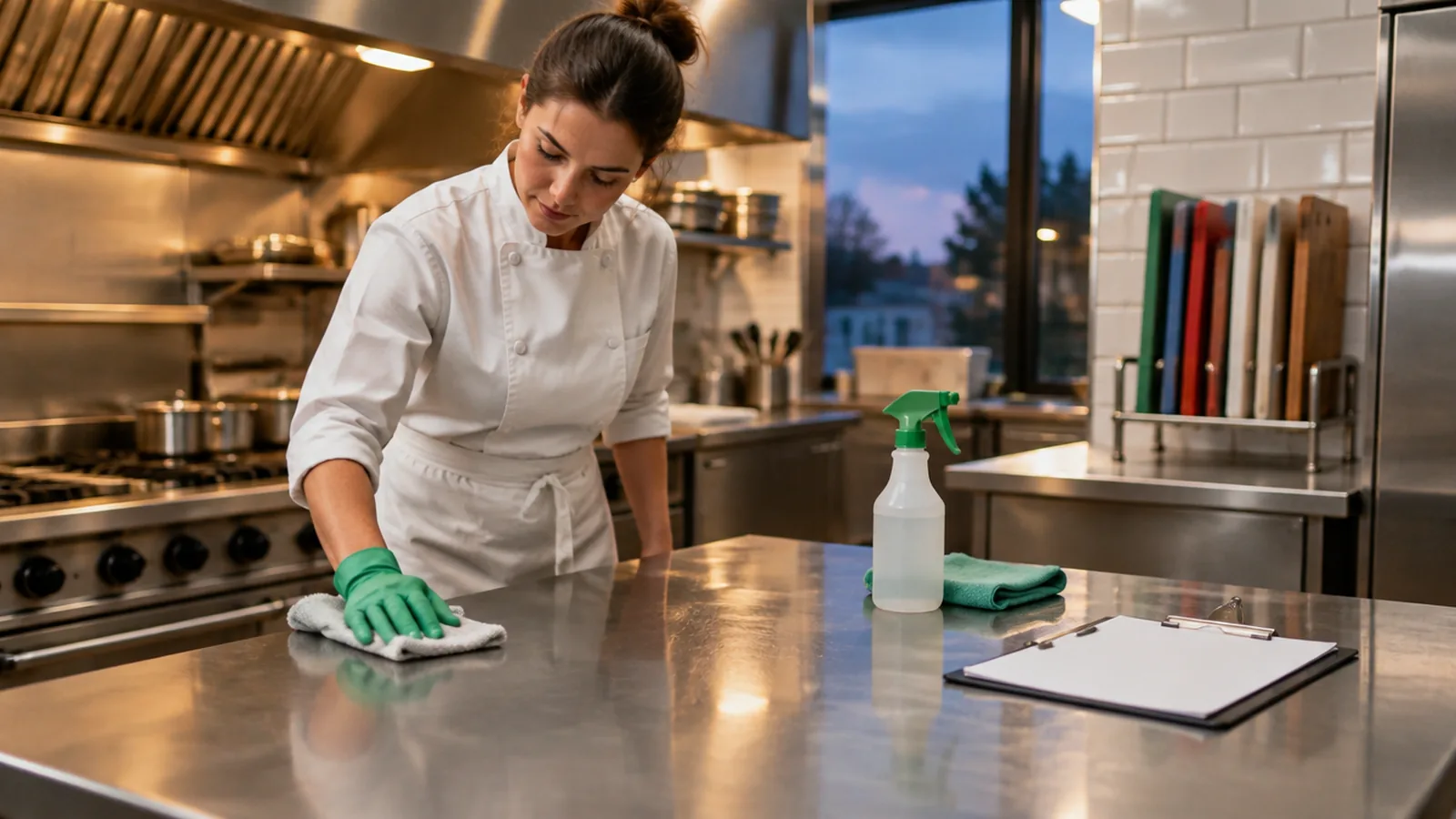
After closing, a cloth goes over the worktop, the floor gets a mop, and someone says: we’re clean. The NVWA inspector does not ask whether you are clean. They ask what was done yesterday, with which product, and who signed it off. A damp cloth is an action. A cleaning plan is the agreement that makes that action repeatable.
That applies in a restaurant with three services, in a sports canteen that only opens on Sunday, and in a food truck where the worktop is a hatch. The menu differs. The duty to keep rooms and equipment clean does not.
What a cleaning plan is
Anyone who prepares, processes or sells food must work with a HACCP food safety plan. Most hospitality businesses follow the Hygiene Code for Hospitality from Koninklijke Horeca Nederland. The NVWA has approved that code: if you follow it, you meet the duty to have such a plan. That is on nvwa.nl (in Dutch).
Keeping things clean is part of that plan. The NVWA puts it plainly: the kitchen, storage and other work rooms must be clean, and so must the equipment. You clean rooms, materials and appliances regularly, and you disinfect them. That keeps dirt or bacteria off the food. It is on their page about working clean and safely (in Dutch).
A cleaning plan, or cleaning schedule, is not a poster nobody reads any more. In the test we ask what belongs in it: what you clean, when, how, with which product, and by whom. Signing it off shows it has been done. Without those five points it is a promise.
Cleaning is not disinfecting
Cleaning, or washing, removes visible dirt: grease, crumbs, a rim of sauce. Disinfecting kills the micro-organisms that are still there afterwards. A surface can look clean and still carry bacteria. That is why the order is fixed: clean first, then disinfect. The other way around, the product works poorly because it disappears into the dirt.
You disinfect places that touch food: worktop, chopping board, knife, machine. Not everything that shines needs a spray bottle. What does: follow the label. Too little product or too short a contact time will not kill what you think you are killing. Too much leaves residues that can end up in the food. Store chemicals away from food, in the original labelled container. Not in an empty cola bottle next to the oil.
Daily, weekly, monthly
The NVWA says ‘regularly’, not a calendar for every appliance. The hygiene code asks for a schedule that fits your kitchen. A canteen with a toastie grill has a shorter list than a kitchen with a slicer and a hood over six burners. What works in practice is a rhythm the team knows by heart.
| What | When | Why |
|---|---|---|
| Worktop, chopping boards, knives | After use, and at the end of the shift | That is where the food sits |
| Floor | Daily | Grease and crumbs, and pests follow |
| Inside the fridge | Weekly; spills at once | The tray of salad sits next to it |
| Slicer | Taken apart weekly; more often after meat | The gaps hold leftovers |
| Extractor hood and filters | Monthly, more often if grease drips | Grease that falls back is not seasoning |
A board after mustard or after raw chicken you wash thoroughly, or you take a clean one. A dry cloth over it is the wrong answer in the test. That is also in Celery counts. Strawberry does not..
Colour on the board, colour on the cloth
Cross-contamination travels via hands, boards, knives and cloths. In the test the example is raw chicken and then lettuce: a different board, a different knife, wash your hands. The lettuce does not go into a pan afterwards. Many kitchens put a colour on that. Red for raw meat, yellow for poultry, green for vegetables, blue for fish. The law does not prescribe those colours. What it does ask: no bacteria or allergens from one product onto another.
The same goes for cloths. The toilet cloth does not go on the worktop. Neither does the floor cloth. In a sports canteen the classic is the cloth that wipes the toastie grill and then the worktop. That is one cloth, two hazards. More on that canteen is in The sports club canteen has to be able to explain it too.
Replace dishcloths at least every day, and straight away when they are dirty. Or use disposable ones. A damp cloth is a breeding ground, even when it looks clean. A system the team knows is better than a poster with six colours that nobody follows.
Who signs it off
The NVWA says you may use a cleaning plan or a list. That may come from the hygiene code, from a wholesaler, or from a notebook you keep yourself. KHN has a model form for the cleaning roster (in Dutch). How you record it is up to you. What you must be able to show: that the work was done.
Note the date, what was done, and a name or initials. Even when someone skipped the hood because the shift ran late. A list that shows nothing but ticks for a whole year is exactly the reason for an inspector to stay longer. That is the same logic as the temperature log that always says 4.0. That is in 11 degrees at the door.
What the inspector checks
The NVWA checks whether you work with a food safety plan or hygiene code, and how you follow the HACCP rules. For cleaning that is not a gold border on a PDF. It is the kitchen itself: the worktop, the gap under the fridge, the cloth by the sink, and whether people can explain what they do when the machine stays dirty.
- Does the kitchen look clean, including under and behind equipment?
- Is there a schedule, and does that schedule match what you see?
- Can people explain the difference between cleaning and disinfecting, and the order?
- Do raw and ready-to-eat, and the cloths that go with them, stay apart?
- Are chemicals stored away from food, in the original container?
- Does the toilet door not open straight onto the prep room?
The meaning of that way of working, the seven principles around it, is in what HACCP means. If you want to instruct this weekend’s crew: the HACCP course, one link, English or Dutch. What the paper shows is in the HACCP certificate.