Kitchen
The cold room stays home. Seven degrees does not.
Kitchen5 min read
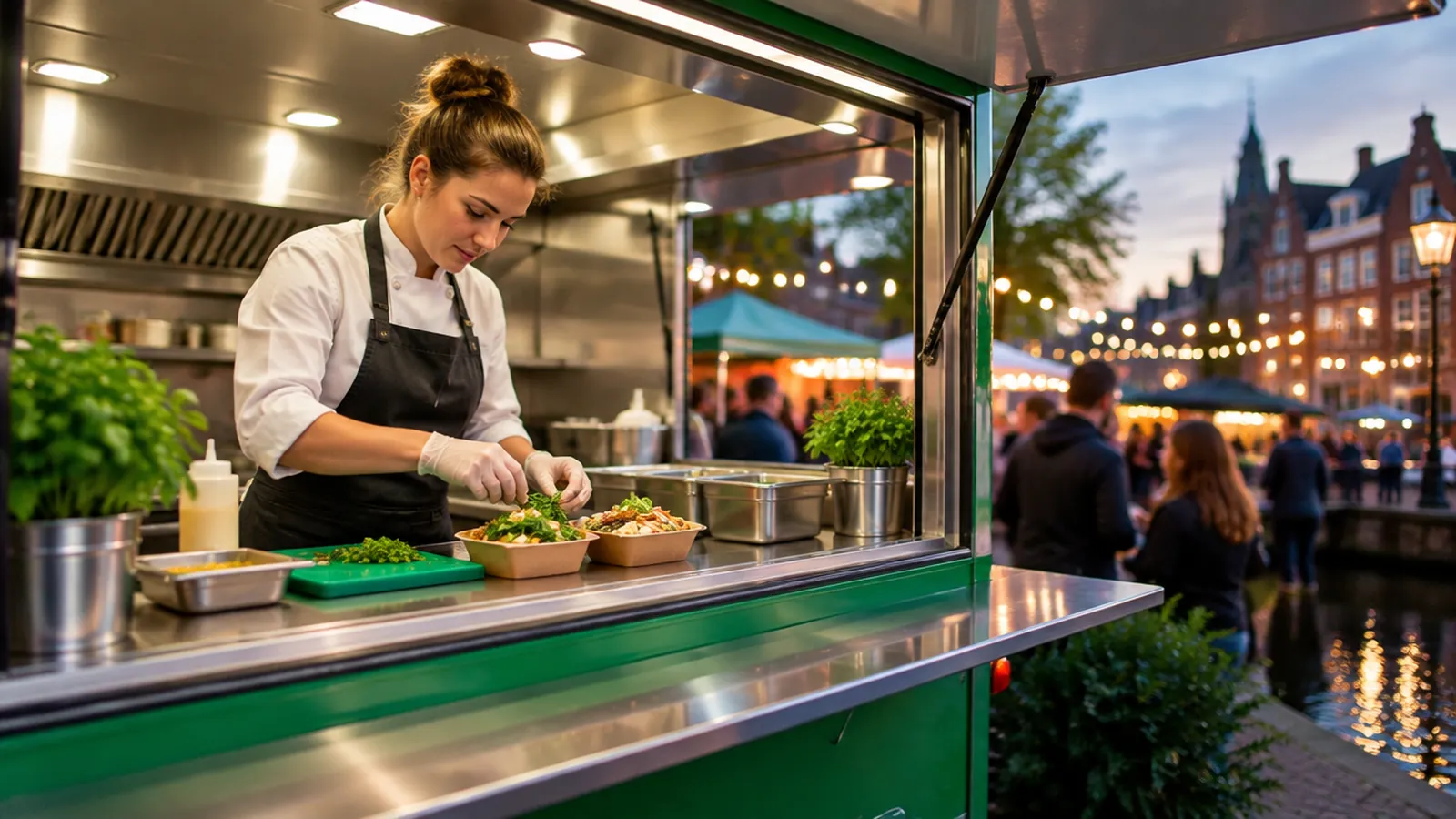
At an evening market the hatch is open, the queue is long, and the cold well is full of tubs that have already sat in the sun for two hours. The tent next door sells the same thing. The NVWA does not make an exception of that hatch. A food truck is a kitchen on wheels. No cold room, no tap in the wall, but the same 7°C and the same duty to explain what you do when the tub is too warm.
The same hazards apply at the market
Regulation (EC) No 852/2004 applies to food businesses. A stall, a tent or a truck that sells food belongs there. The NVWA puts it plainly: it does not matter whether you are a business or a private person. Anyone who prepares and sells food more than once a year must work with a HACCP food safety plan. You do not have to write that plan yourself. If you follow the sector’s hygiene code, you work along a route the inspector recognises.
What goes wrong is rarely the theory. It is the wind that blows sand into the tub, the bystander who touches a roll, the dog under the hatch, and the board that first saw the raw chicken and then the salad. Separate chopping boards for raw and cooked, waste that can actually leave, and a worktop you can really clean: that is hygiene at an event, not an extra diploma.
Keeping food cold without a cold room
The hygiene code asks for 7°C or lower for most chilled goods. If the label is colder, that applies. A cold room back at base does not bring that limit to the market. A cool box with ice packs or a stand-alone fridge on a generator can, if the food itself stays under 7°C. Reading the fridge display does not count. The NVWA wants a digital probe thermometer in the product, not a green light on the door.
In practice, chilling starts at home. Tubs that go into the truck already too warm do not get colder on the road. Not overloaded, lid on, raw and ready-to-eat apart, and not on the ground. Melted ice is no longer cooling. If a chilled box arrives at 11°C, it goes back. Quickly putting it in your own well does not count as a correction. That is also in 11 degrees at the door.
Hot holding is on the other side: at least 60°C. Chicken you heat to above 75°C. That last number is not a hot-holding figure. A tub of pulled chicken that sits at 50°C all afternoon feels hot and is still the zone where growth is fast.
| Point | Limit | In the truck |
|---|---|---|
| Chilled storage | max. 7°C, or colder if the label says so | Measure in the product, not on the display |
| Hot holding | min. 60°C | Not 50°C because it ‘still feels hot’ |
| Heating (chicken) | above 75°C | A different step from hot holding |
| Cooling | 60°C → max. 7°C within five hours | Shallow trays, or throw it away |
Water and hands on board
If you touch unpackaged food with your hands, you must be able to wash those hands. The NVWA is specific: running hot and cold water, soap, paper towels. A bottle of gel next to the fryer is not a sink. Gel helps. It does not replace washing.
In a truck that means drinking water from a tank, a tap that actually runs, and a drain for the dirty water. How many litres the tank must hold is not a fixed number from the NVWA. What is: enough for the service, including hands between the raw chicken and the roll. If the tank is empty at four and the market runs until six, the hatch is the problem from that moment on.
The log on the road
A measurement you do not record does not exist during an inspection. Note the time, the product and the reading: at loading, on the road, and behind the hatch. Even when the reading is disappointing. A log that shows nothing but 4.0 all summer is exactly the reason for an inspector to stay longer.
Cooling down in a truck is hard. Cooked food that goes back into the cold is cooled, according to the hygiene code, from 60°C to 7°C or lower within five hours. A full, covered pan in a cool box rarely makes it. Shallow trays, less volume, or throw it away: that is the action, not hoping the ice will save it.
What the NVWA checks at the hatch
The inspector comes on site. Not to see whether your PDF has a gold border, but whether you work hygienically, whether the space is suitable for preparing food, whether the temperature is right, and whether there are no mice or other pests. If it is not in order, a warning or a fine can follow, and unsafe food has to go. The same inspector often comes back later that day.
- Hands: running hot and cold water, soap, paper.
- A clean worktop and clean equipment, and waste that can leave.
- Food protected: no sand in the tub, no bystanders’ fingers, no animals at the food, nothing on the ground.
- Chilled under 7°C, hot at 60°C or above, measured with a probe thermometer.
- Allergens you can name or show, without guessing.
- A plan or hygiene code you can point to, and records that match reality.
The list of fourteen allergens, including celery, is in Celery counts. Strawberry does not.. The NVWA itself writes about markets and events on nvwa.nl (in Dutch).
A restaurant and a truck differ in their walls. The meaning of the acronym does not. That is in what HACCP means. If you want to instruct this weekend’s crew: the course on your phone, one link, English or Dutch.