Rules
The inspector is at the door. Now what?
Rules4 min read
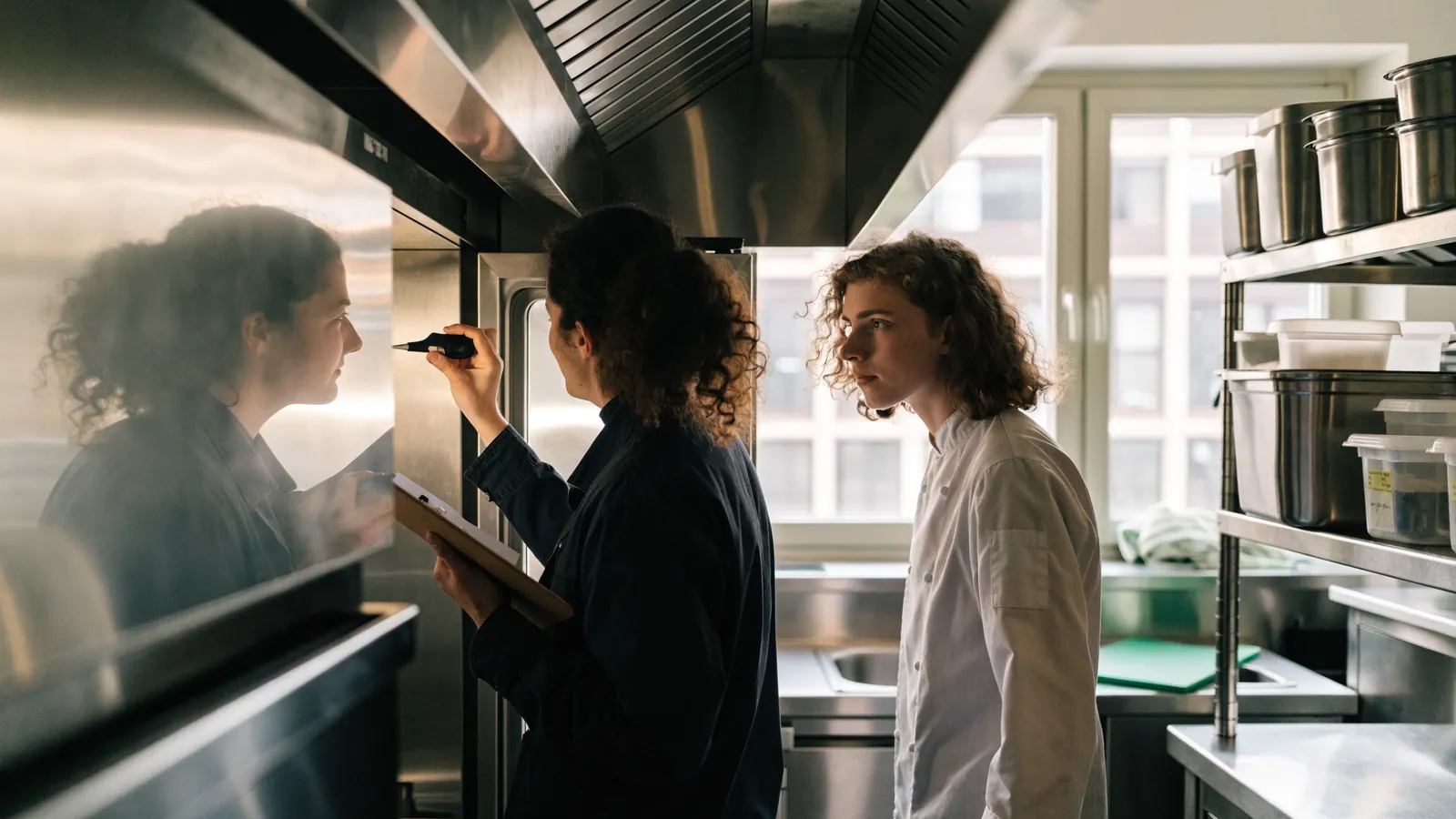
The inspector from the NVWA, the Netherlands Food and Consumer Product Safety Authority, rarely calls ahead. In a restaurant kitchen, a sports canteen or a food truck the round is the same: look, measure, ask. Not whether your PDF has a gold border. Whether the fridge is right, whether the log is up to date, and whether tonight’s cook can explain what they do when the chicken arrives too warm.
The NVWA says so itself: hospitality inspections are usually unannounced. They check whether you have followed the hygiene rules, and whether the records have been kept. For cooks, shift leads and owners that is one round. Not a theory book.
What is usually in the round
The inspector shows an official pass, checks the business, and asks for the hygiene code or another approved food safety plan. Then the kitchen. Clean enough to work in, no gaps pests can walk through, and the cleaning products you say you use.
- Temperature records and core temperatures. A digital probe thermometer in the product, not just the display on the fridge door.
- Chilling and hot holding. Most chilled foods at 7°C or lower, or colder if the label asks for it. Hot holding at 60°C or above.
- Storage and labelling. Open tubs with a date you can read. A use-by or best-before date that has passed is not a ‘little longer’.
- Personal hygiene. Hands at the moments that matter, jewellery off hands and wrists, workwear that belongs in the kitchen.
- A cleaning plan someone can point to, and whether pests are actually kept out: no open sacks, no holes you have known about for weeks.
- Allergens. The fourteen, and whether someone can say them or look them up without shouting to the kitchen and guessing.
- Whether the team can explain the hygiene code or the HACCP plan. Not recite it. Explain it.
- Whether the records are there. A measurement you did not write down does not exist during an inspection.
The numbers themselves, and why 11°C at the door is not a delivery, are in 11 degrees at the door is not a delivery. Celery, mustard and the rest of the list: Celery counts. Strawberry does not..
The folder has to be there
Working to a hygiene code or an approved plan is required. The inspector asks for it. A folder in the owner’s car does not help tonight’s shift. Someone who is there must be able to pick it up and say, in plain language, what you monitor: receiving, chilling, heating, cleaning.
The personal certificate is something else. The NVWA does not check whether that paper has a gold border. They check whether you know what you are doing. How that paper relates to the legal duty is in HACCP certificate: what the law asks.
If something is not right
If the inspection is fine, nothing more happens. After a finding the inspector follows the NVWA’s intervention policy. That can be a conversation with compliance help, an official warning, a report that can lead to a measure or a fine, or in serious cases an official police report. Those steps can also come together.
After an official warning you often have to show that you fixed the breach, with evidence, within the time you are given. If that follow-up is incomplete or late, a physical re-inspection can follow. After a more serious breach the NVWA also comes back to check that the agreement was kept. If it is still wrong, a fine, a measure or intensified supervision can follow.
How high a fine is depends on the law and the offence. The NVWA weighs, among other things, how serious it is, whether it has happened before, and how large the risk is. There is no single amount that ‘everyone’ gets, and a number invented here will not help you. The rules are on nvwa.nl (in Dutch). Results of hospitality inspections are made public.
The night before
You do not know whether they will come tomorrow. There is still a round that saves a shift if they do.
- Measure the fridges and write it down, even when the reading is disappointing. A log that only shows 4.0 is not reassurance.
- Open products: date, lid, raw and cooked kept apart. Anything past its use-by or best-before date goes.
- The probe thermometer works, is clean, and is not in a drawer nobody opens.
- Handwashing: soap, paper, warm water. No empty dispenser by the door.
- This week’s cleaning list is filled in, not only Monday’s line.
- No open flour sacks on the floor, no gaps you have been meaning to fix for weeks.
- Allergen chart or folder at the pass, and someone who can use it.
- Hygiene code or plan in a drawer that opens. Whoever is on shift knows where that drawer is.
A paper certificate does not replace that round. It does help if the team recognises the questions before someone with a clipboard is standing in the kitchen. The HACCP course practises the same points: hands, receiving, temperature, cross-contamination, allergens. No classroom evening. A link, a test, and a PDF in your name.