Kitchen
Best before is advice. Use by is a line.
Kitchen6 min read
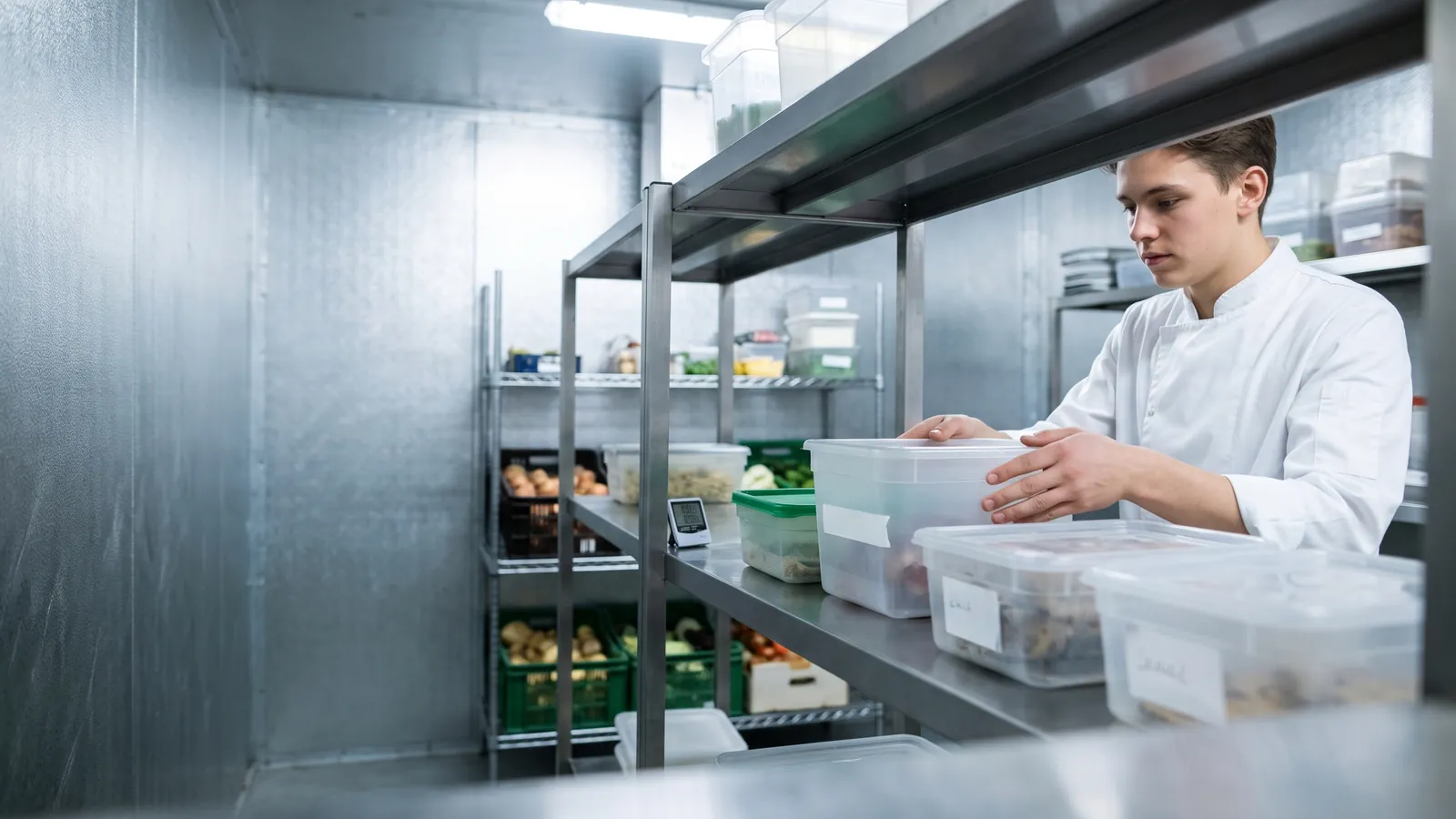
In the cold room sits a tub without a label. Someone says: that’s from yesterday, it’s fine. The NVWA inspector does not read yesterday. They read a date, or they read nothing. Nothing is not a date. In a restaurant kitchen, a sports canteen or a food truck that is the same gap: you cannot explain how old it is, so you cannot explain whether it is safe.
Shelf life is not an extra diploma. It is the agreement that makes the team treat the same tub the same way. Best before is advice. Use by is a line. FIFO is how you reach that line before it is there.
Best before is quality, use by is safety
Best before is THT in Dutch: ten minste houdbaar tot. The maker says that up to that day, taste, colour and texture stay in order if you store it as the pack says. After that it is not automatically poison. It is not a free pass either. You look, you smell, you taste if that is possible, and you throw away what is doubtful. A tin of lentils that looks fine is not the same as an opened cream that has sat in the door for a week.
Use by is TGT: te gebruiken tot. That is a safety date, meant for perishable food: meat, fish, cut vegetables, fresh dairy, a lot of ready-to-eat. After that date the product is finished. Do not sell it, do not serve it, do not ‘freeze it quickly to save it’. You freeze before the use-by date, with a new date on the tub, not after.
| Date | Meaning | After the date |
|---|---|---|
| Best before / THT | Quality, if you store it as the pack says | Sometimes still fine, after a sensory check |
| Use by / TGT | Safety, for perishable food | Throw it away. No ‘a little longer’ |
The NVWA makes that distinction too. A use-by date that has passed is not a discussion. A best-before date that has passed without anyone looking is not one either. ‘It still smelled fine’ is not a record.
Opened and house-made: a date on the tub
The date on the closed pack is for that pack. Once you open the jar, or scoop sauce into a gastronorm tray, a new clock starts. If the label says ‘two days after opening’, that is the rule, not the best-before date on the closed jar. If it says nothing, you follow the hygiene code and your own plan: a limited time, kept cold, and a label someone else can read.
House-made food is the same story. Soup, sauce, cut vegetables, a tub of pulled chicken for the truck: the inspector sees a tub, not a recipe. Without a name nobody knows what is in it. Without a date nobody knows how old it is. Without initials nobody knows who put it there when the team changes.
- What it is. ‘Sauce’ is not a name. ‘Mustard vinaigrette’ is, including for allergens.
- When it was opened or prepared, and until when it may be kept.
- Who put it there: a name or initials the shift recognises.
- Lid on. An open tub in the cold room is not a label.
Mustard is an allergen. A house-made sauce without a name is a guess for a guest with an allergy. What belongs on the menu, and why a dry cloth does not remove the mustard, is in Celery counts. Strawberry does not..
FIFO, and when FEFO is smarter
FIFO is first in, first out: what arrived first goes into the kitchen first. New stock at the back, old stock at the front, label facing out. The same rhythm in the cold room and the freezer. A box that disappears at the back is not stock. It is throwing food away with a delay.
FEFO is first expired, first out: what expires first goes first. That is smarter when a later delivery has an earlier date. The driver puts the new crate at the front because it is closest to the door. You turn it. The date, not the arrival, is the order.
In a sports canteen that only opens on Sunday, FEFO is the difference between next week’s milk and the milk that already hit its use-by date on Monday. In a food truck that order starts at loading: what you need tonight sits at the front, with a date you can still read in the dark.
How long prepared food may keep
The Hygiene Code for Hospitality from Koninklijke Horeca Nederland is the route most businesses follow. The NVWA has approved that code. If you follow it, you have a plan. It does not write its own numbers onto this page. What it does ask: keep prepared food cold, usually at 7°C or lower, or colder if the label asks for it, and only for a limited number of days. Not a week of soup ‘because it still smells’. Not a tub of pulled chicken that rides in the truck from Saturday to Thursday.
Cool it down first, then store it. Cooked food that goes back into the fridge is cooled, according to the hygiene code, from 60°C to 7°C or lower within five hours. A full, covered pan in an overloaded fridge rarely makes it. Shallow trays, less volume, and not on top of what is already cold. Those numbers, and why 11°C at the door is not a delivery, are in 11 degrees at the door is not a delivery.
Freezing extends the life if you do it before the use-by date and put a label on. You do not freeze a thawed product again. A tub without a date in the freezer is, a month later, the same tub without a date.
What the inspector sees
The round through the fridge is short. Tubs without a label. A use-by date that has passed. A best-before date from weeks ago without anyone being able to say they checked. Raw next to salad. A log that always shows 4.0. That is enough to stay longer. What else is in that round is in The inspector is at the door. Now what?.
- Open tubs with a date you can read. No marker that has wiped off, no scrap of paper that fell into the sauce.
- A use-by date that has passed is gone. A best-before date that has passed without a check is gone too.
- Raw and ready-to-eat kept apart, lid on, nothing on the floor.
- The cold room itself: clean enough to store food. A sauce rim from last week belongs in the cleaning plan, not next to the salad.
A checklist for the cold room
You do not know whether they will come tomorrow. This round saves the shift if they do, and the stock if they do not.
- Every open or house-made tub: what, when, until when, who.
- Use-by date that has passed: throw it away. Best-before that has passed: look, smell, decide, or throw it away.
- New stock at the back. What expires first, at the front.
- Measure the fridge and write it down, even when the reading is disappointing. Usually 7°C or lower.
- Raw and ready-to-eat kept apart. Lid on. Nothing on the floor.
- Freezer: the same label, the same order. Thawed stays thawed.
- In a canteen or a truck: what you do not need tonight stays home or goes.
A label does not replace a team that reads the date. It does help if everyone knows the same line before the tub goes to the pass. The HACCP course practises those limits: receiving, temperature, cross-contamination, allergens. One link, English or Dutch, and a PDF in your name.
Frequently asked questions
What is the difference between best before and use by?
- Best before (THT in Dutch) is a quality date. Use by (TGT) is a safety date. After a use-by date the product is finished. After a best-before date you may still use it if storage was right and your senses agree.
Can you still use food after the best-before date?
- Often yes, if it was stored correctly and looks, smells and tastes fine. Best before is not a free pass to keep soup for a week. A use-by date that has passed means you throw it away. No ‘a little longer’.
What belongs on an opened or house-made tub?
- What it is, when it was opened or prepared, until when it may be kept, and who put it there. A tub without those facts is not stock to an inspector.